| 08:15 - 09:00 |
Registration & Reception (reception hall 1st floor & foyer HU-Plein) |
| 09:00 - 09:30 |
Opening | conference chair Ivo Opstelten & Wilma Scholte op Reimer (conference room 2.404) |
| 09:30 - 10:15 |
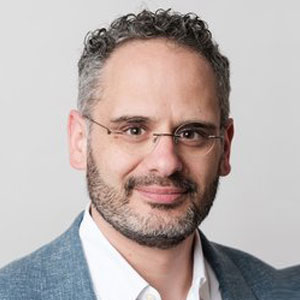
Keynote speech: Trends and innovations in the field of energy transition | Arash Aazami |
| 10:15 - 10:45 |
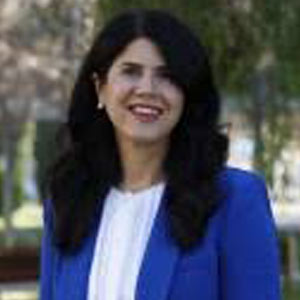
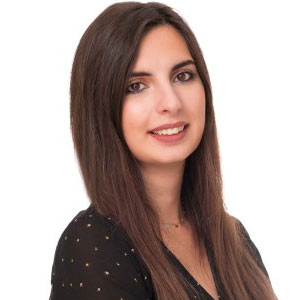
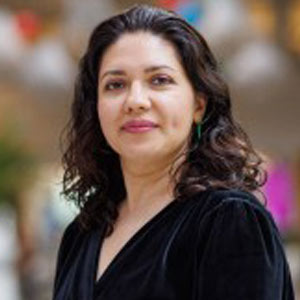
Panel discussion: Aligning energy education and training with the evolving energy labour market needs | Remko van der Lugt, Jop van Amelsfoort, Marsha Wagner & Mark Tammer |
| 10:45 - 11:15 |
Coffee break & Exhibition (foyer HU-Plein) |
| 11:15 - 12:45 |
Oral Sessions–I & Student Track 1(session rooms)
- OS1 Innovative energy education: Reimagining energy education (room 2.003A)
Chair: Noman Hanifa
| 1.1 | #41 | Stephen Wittkopf | Coloring Energy Education: A Transdisciplinary Approach in the Continuing Education Programme on Photovoltaics | | 1.2 | #24 | Connor McGookin, Derek Gladwin & Naoko Ellis | Applying the energy literacy framework in a transdisciplinary doctoral programme | | 1.3 | #28 | Jan Lauwerijssen | Exploring the impact of a UAC Good Practice in VET | | 1.4 | #69 | Mansi Mehta*, Loredana Tiedke & Semih Severengiz | Enhancing Sustainable Energy Education: Use of Scenario Studies | | 1.5 | #42 | Anna Kerstin Usbeck & Fatou Ndiaye | Educating Global Engineers for Sustainable Energy: Integrating Systems Thinking, Mobility and Applied Learning |
- OS2 Region as campus (room 2.003B)
Chair: Aleksi Heinonen
| 2.1 | #3 | Hans Gelten, Richard van Leeuwen, Benno Aalderink, Mirte Disberg-van Geloven, Stephan Corporaal & Yashar Hajimolana | A challenged-based Learning Community for hydrogen development, applications and education | | 2.2 | #53 | Konstantinos Karamarkos*, Athina Krestou & Theofano Kollatou | Living Labs in the Energy Education Sector: Bridging Academia, Industry, and Communities | | 2.3 | #63 | Bettina Minder & Ute Klotz | Is separate data on the energy consumption of the individual departments accessible? A living lab approach to energy awareness at universities | | 2.4 | #84 | Eugène Zaaijer | Thinking Outside the Campus | | 2.5 | #86 | Evelien Ketelaar, Lenny van Onselen & Esther Wijma | Crossing boundaries in sustainable energy education: Insights into regional and transnational collaboration and learning |
- OS3 Innovative energy education: Models & tools in education (room 2.003C)
Chairs: Annika Kunnasvirta & Minna Harju
| 3.1 | #15 | Joost Jongen | Hydraulic Modelling Tool for Education | | 3.2 | #38 | Carolin Hundt & Frank Pothen | Integrating Sustainability into Engineering Curricula: A Practical Example from Germany | | 3.3 | #45 | Linda Becker, Michele Martin, Loredana Tiedke & Semih Severengiz* | Chatbottutor for higher education– Experimental Design for Optimizing Technical Accuracy | | 3.4 | #33 | Joost Jongen & Bram Smit | Simulating counter heat exchange in Excel | | 3.5 | #72 | Noman Hanifa, Lisa Wendzich & Semih Severengiz* | The Solar Charging Station as a Model Example for Effective Teaching and Scientific Knowledge Transfer |
- OS4 Skills, equity, and reality in the energy sector labour market (room 2.001)
Chair: Elena De La Poza Plaza
| 4.1 | #13 | Theofano Kollatou*, Athina Krestou & Andreas Maropoulos | One Transition, Two Realities: Energy Labour Markets in Europe and Greece — A Focus on Western Macedonia | | 4.2 | #32 | Paraskevi Kapetanopoulou, Stergios Maropoulos & Stefanos Gerardis | Identifying future needs and skills by the solar sector in Greece | | 4.3 | #43 | Noemi Monterde Higuero, Carolina Navarro Correcher & Josep Sanz Argent | Detecting training needs: A critical step for a successful energy transition | | 4.4 | #47 | Nikolaos Taousanidis & Andreas Taousanidis | Socioeconomic Realities of the Just Transition: The Case of Western Macedonia, Greece | | 4.5 | #39 | Mara van Eijndhoven & Ad Breukel | From Classroom to Energy Community: How Students Accelerate the Energy Transition Through New Perceptions |
- Student Track 1 (PL99 room 1.232 (Concept Space))
|
| 12:45 - 14:15 |
Lunch break, Exhibition & Poster Session–I (foyer HU-Plein)
Poster Session–I:
|
| 14:15 - 15.15 |
Workshop Sessions–I
- WS01 Continued professional development for professionals in energy (room 2.207)
Kai Forster (University of Cape Town) This session shares practical insights from developing four professional development courses co-created by TEA-LP, AMI, and African experts. Over the hour, speakers reflect on lessons from designing CPD and university curricula, drawing out what works in aligning audience needs, academic rigor, and real-world application. Participants will explore how collaborative design, contextual relevance, and thoughtful use of technology strengthen course quality and accessibility. Breakout discussions create space to compare experiences, surface common challenges, and identify actionable ideas for improving learning pathways. The workshop highlights how these CPD programmes are addressing skills gaps in the energy sector and supporting workforce readiness for a just and sustainable energy transition. - WS02 Navigating cultural complexity (room 1.210)
Frans van den Akker (RHDHV), Eugene Zaaijer (HU University of Applied Sciences Utrecht), Fionna Heuff (RHDHV)
The interactive workshop "Navigating Cultural Complexity" is designed for everyone involved in European research projects. Explore how cultural differences influence communication, decision-making, and teamwork. Through hands-on activities and expert insights, you’ll gain practical tools to bridge cultural gaps, strengthen mutual understanding, and drive project success. Participants will reflect on their own cultural values, discover proven frameworks such as Hofstede and Lewis, and leave with actionable strategies to foster empathy and effective collaboration. Whether you are new to international projects or an experienced collaborator, this workshop will help you transform cultural complexity into a source of strength and innovation. - WS03 Building excellence together - Insights from sustainable energy CoVEs (room 1.209)
Miriam Korstanje (Katapult)
How can vocational excellence drive the energy transition? In this session, European Centers of Vocational Excellence (CoVEs) in sustainable energy share their achievements, challenges, and lessons learned from cross-border collaboration. Participants will gain first-hand insights into innovative training models, collaborative governance, and partnerships with industry and policy makers that strengthen skills ecosystems for the green transition. The workshop also presents practical tools and strategies for anyone interested in starting or joining a CoVE in this field. Whether you work in education, innovation, or the wider energy sector, this session offers inspiration, peer learning, and concrete pathways to turn ideas into impact. - WS04 Skills from the frontlines of the energy transition (room 1.207)
Angelique Ruiter (HU University of Applied Sciences Utrecht), Marlijn Dingshoff (HU University of Applied Sciences Utrecht), Marie Morel (University of Applied Sciences Amsterdam)
How do professionals make confident decisions when the path forward is unclear? The energy transition is full of complex moments that test not only technical expertise but also collaboration, empathy, and resilience. This interactive workshop explores how professionals from municipalities, cooperatives, housing associations, and heating companies navigate uncertainty in local energy transitions. Drawing from real Dutch cases, we uncover key moments where systems fell short and soft skills made the difference. Through a panel and audience reflections, participants identify which skills matter most—and how education and organizations can better prepare professionals for dealing with complexity. - WS05 Seeing yourself as a next-generation trainer: From reflection to continuous learning (room 1.211)
Evridiki Mantela (CLUBE), Athina Krestou (Univeristy of Western Macedonia)
How can trainers evolve to meet the learning needs of tomorrow? This interactive workshop invites educators, researchers, and VET professionals to explore a participatory self-assessment tool that visualizes trainer competences through a dynamic skills mapping. Participants will identify their strengths, reflect on growth areas, and engage in collaborative discussions to exchange effective practices. By combining reflection, peer learning, and forward-looking insight, the session empowers participants to strengthen their role as next-generation trainers, adaptive, innovative, and continuously learning. It also contributes to shaping a European good-practice framework for trainer excellence. If you are committed to advancing teaching quality and fostering innovation in VET, this workshop offers inspiration, self-discovery, and co-creation in one engaging experience. - WS06 Youth powering the energy transition (room 1.212)
Willemijn de Boer (Energy student)
Want to shape the energy transition and maybe co-own a wind turbine? In this interactive workshop, you'll explore how young people can drive energy cooperatives and renewable projects. Learn how energy communities work, how they’re financed, and how youth can influence policy and local action. Through an immersive role-play, you’ll take on the roles of cooperative members, policymakers, and changemakers to see how ideas become action. Discover how collaboration, lobbying, and financial participation can make local wind projects a reality. Whether you’re curious or ready to act, you’ll leave with insights and practical steps to join—or start—an energy cooperative and make a real impact in the energy transition. - WS07 Future of sustainable education: A professional perspective (room 1.214)
Karen van der Moolen, Josje Dikkers, Boudewijn Visscher (Utrecht University of Applied Sciences)
At HU, we spark curiosity and support students in becoming professionals who address real-world challenges in health, climate, society, technology, and safety. We don’t just teach—we open conversations about what a desirable future looks like for students, their professions, and society. Sustainable education is closely connected to students’ future working lives, making collaboration with employers essential for creating meaningful learning environments. This workshop gathers employers from diverse fields to discuss HU’s approach to sustainable education and to share their needs and observations regarding the impact students should make on ecological, social, and economic sustainability. By joining, professional partners can exchange best practices, strengthen cooperation, and help shape sustainable education while supporting sustainable talent entering the local labor market. - WS08 Anticipating labour market bottlenecks - A regional approach (room 1.208)
Sander Troost & Abel Levie (Province of Utrecht)
Demographic change and the major transitions in climate, housing and mobility are putting increasing pressure on our labour market. To remain resilient, regional governments and partners need early insight into where shortages may arise—before a lack of skilled workers disrupts the delivery of policy goals. In this workshop, you’ll explore the key concepts that drive labour demand and supply in a tight market and learn about practical mechanisms that improve the match between employer needs and workforce capabilities. Through interactive exercises, participants will jointly build a focused labour market analysis that highlights the most relevant bottlenecks for policy implementation and strategic planning. Join us to discover how regions like Utrecht can stay ahead of emerging challenges and shape a labour market that is future-proof, resilient and truly inclusive. - WS09 Learning in transitions: An interactive expo on education innovation (PL99 room 1.232 (Concept Space) & PL99 room 1.320 (Protype Lab))
Lenny van Onselen (HU University of Applied Sciences Utrecht)
How can we reshape education for a sustainable, rapidly changing world? Join the Learning in Transitions Expo, a co-created and co-hosted event that showcases cutting-edge Dutch tools, frameworks and real-world practices designed to strengthen learning in times of transition. Explore the House for Sustainable Education and its SDG-based toolkit, try the Self-scan for Sustainable Education to reflect on your curriculum, and experience challenge-based learning through student prototypes from the Sustainable City Challenge. Engage with regional learning transitions using conversation charts, reflect on the Inner Development Goals through interactive posters, discover methods for enriching learning environments, and explore the potential of nature as an outdoor classroom. Throughout the expo, participants can experiment with these tools in small, hands-on inspiration workshops guided by expert facilitators. Leave with fresh insights and practical approaches to innovating education for a sustainable future.
|
| 15:15 - 15:45 |
Coffee break & Exhibition (foyer HU-Plein) |
| 15:45 - 17.15 |
Workshop Sessions–II
- WS10 Decision-making in the heat transition - a serious game (PL99 room 0.251A (BE-Lab))
Guus Schrijver (de Constructieve), Gerard Hoskens (De Constructieve), Imke Nabben (HU University of Applied Sciences Utrecht), Marit Béguin (HU University of Applied Sciences Utrecht)
How can we make fair, effective decisions about collective heating systems in our neighborhoods? Who owns the network, and how do we keep costs fair for residents? In this interactive serious game, participants take on the roles of residents, policymakers, businesses, and knowledge institutions to explore the complexity of collective heating decisions. Through realistic roleplay and guided negotiations, players discover the diverse interests and interdependencies that shape the energy transition. The game challenges participants to move beyond individual perspectives and collaborate toward sustainable, just solutions — an engaging way for anyone involved in the energy transition to experience collective decision-making in action. - WS11 Playing the carbon reduction game - Experiencing the energy transition first-Hand (PL99 room 0.118 (Theater))
Robert Harmsen (Utrecht University) & Sander van Egmond (Infinito Design)
Step into the role of industrial decision-makers facing ambitious climate targets. In this immersive workshop, teams of five manage a virtual company and balance profitability with CO₂ reduction. On a 4×4 meter XXL game board featuring wind turbines, pipelines, and carbon capture units, you will negotiate, compete, and decide whether to buy emission allowances or invest in clean technologies. This serious game drives strategic thinking, collaboration, and lively debate about real-world energy transition challenges. The session offers educators direct insight into how playful, hands-on formats can deepen understanding of complex climate and industrial systems, transforming the way we teach the future of energy. - WS12 Sustainability tour at the Utrecht Science Park (HL15 entrance (joint departure 15.35h, at Meeting Point in front of PL101))
Sara Herreras Martinez & Ron van Brenk (HU University of Applied Sciences Utrecht), Joep Wijnhoven (Utrecht University)
Join us for an inspiring sustainability tour through the Utrecht Science Park (USP) and explore a range of concrete sustainability initiatives taking place across the campus. Throughout the tour, there will be plenty of opportunities to exchange ideas, ask questions, and get inspired. We begin with a visit to one of the most sustainable educational buildings in the Netherlands, where smart design, sustainable heat systems and storage, energy efficiency, and circular construction come together to create a future-proof learning environment. We will then explore an outdoor living lab that demonstrates how new solar technologies are designed, tested, and integrated into research and education. If time allows, the tour will conclude with a visit to a farm at the Veterinary Faculty that uses a compost-based heating system—where woodchips and natural decomposition work together to generate renewable heat. - WS13 Understanding and solving today's energy crisis disasters (PL99 room 1.232 (Concept Space) & PL99 room 1.320 (Protype Lab))
Aleksi Heinonen (Turku University of Applied Science)
Experience how modern energy systems react when disaster strikes. This interactive workshop invites participants to step into the roles of key stakeholders — governments, companies, producers, and consumers — and respond to a simulated major energy crisis such as a large-scale blackout, cyberattack, or conflict disrupting supply. Using real-world data on gas, electricity, and renewables, groups make rapid decisions, negotiate trade-offs, and coordinate actions to contain cascading impacts. Through this hands-on role-play, participants gain insight into the complex balance between demand, supply, and climate goals, and why system-wide breakdowns occur. The session fosters collaboration and creative problem-solving under pressure, helping participants understand how different sectors can work together to improve resilience. We close with a collective debrief and the creation of a shared Resilience Action Map highlighting priorities and strategies to strengthen future energy systems. - WS14 Country competition – Who has the brightest solar future? (PL99 room 2.231)
Lukas Sturm & Michele Velenderic (Green Power Brains)
Join us for a playful yet insightful challenge where countries and organizations compete for the solar crown! The Country Competition takes participants through three dynamic rounds: Treasure Hunt: Use PVGIS to uncover the highest solar potential and calculate cost and CO₂ savings. Quiz: Test your knowledge of PV system design, from components to hybrid, off-grid, and on-grid solutions. Bingo: Spot the key challenges in the African PV market and differences to the European market and learn why they matter. Whether you are a student, educator, or energy professional, you’ll leave with new insights, practical tools, and the chance to show that your team - or country - shines brightly in the solar future! - WS15 Seeing the invisible: Comfort challenges in the energy transition (PL99 room 0.238A (E-Lab))
Marcel de Reeder (HU University of Applied Sciences Utrecht), Diede Wiegerinck (HU University of Applied Sciences Utrecht), Pieter de Bie (HU University of Applied Sciences Utrecht)
What happens to comfort when homes switch from high- to low-temperature heating? This hands-on workshop reveals the often-hidden climate issues in the energy transition. With infrared cameras, you’ll explore model houses and detect thermal leaks and weaknesses in the building envelope. In the HU Energy Lab’s large climate room, you’ll experience how 3D modeling and Computational Fluid Dynamics (CFD) can simulate airflow and predict indoor climate problems. Using sensors and laser light, you’ll see in real time how data validates models—helping to design faster, smarter, and more comfortable energy solutions. Designed for teachers, students, and researchers interested in sustainable energy and building performance, this workshop blends cutting-edge tools with practical demonstrations. Discover how to make the invisible visible—and how technology can help create healthier, energy-efficient homes. - WS16 Discovering the Biodigester Living Lab at the Utrecht Science Park (HL7 room 0.021 (joint departure 15.35h, at Meeting Point in front of PL101))
Hermen Bollemaat (HU University of Applied Sciences Utrecht)
Ever wondered how food scraps can power a building? Join this interactive workshop and explore the Biodigester Living Lab at the University of Applied Sciences Utrecht — where innovation turns organic waste into renewable energy. Participants will visit both the lab-scale and full-scale biodigester installations, gaining hands-on insights into anaerobic digestion, biogas production, and circular resource flows. Along the way, you'll learn how this living lab connects research, education, practice, and various fields. Whether you’re a student, teacher, researcher or sustainability professional, this session offers a unique chance to see green technology in action, exchange ideas, and get inspired to start or join a living lab of your own.
|
| 17:15 - 19:15 |
Travel time to the conference dinner |
| 19:15 - 22:00 |
Conference dinner (Restaurant De Hondekop, Wisselstraat 7, 3551 WG Utrecht) |